Find the water’s path before choosing a fix.
Omaha basement waterproofing, drainage and sump systems explained in plain English.
Independent explanations. Local sources. Questions worth asking.
Start with what you notice
What kind of water problem are you seeing?
These four starting points lead to different questions. A symptom helps organize the assessment; it does not establish the cause.
Wall or floor seepage
Note where water first appears and what was happening outside.
Trace the observationsSump pump concerns
Identify the existing equipment, collection point and discharge route.
Prepare sump questionsCondensation or seepage?
Keep humidity readings separate from visible liquid-water entry.
Compare the evidencePossible sewer backup
Water returning through a drain needs its own investigation.
Understand the distinctionA clearer decision
Three steps before you approve work
Document the pattern
Keep dated photographs, affected locations and earlier project records.
Build your recordAsk what explains it
Request the evidence behind the proposed water path and any unanswered questions.
Read an assessmentCompare the full scope
Check collection, discharge, access, restoration and ongoing responsibilities.
Use the checklistLocal context, measured carefully
Omaha weather and housing, with sources
These are city housing estimates and a station’s historical climate normals. They do not measure wet basements or predict a repair at your home.
1991–2020 station baseline. Not rainfall observed in 2026.
See the annual record →The wettest average month in this station’s 1991–2020 series.
See the monthly table →2020–2024 ACS estimate. A housing count, not repair demand.
See the housing context →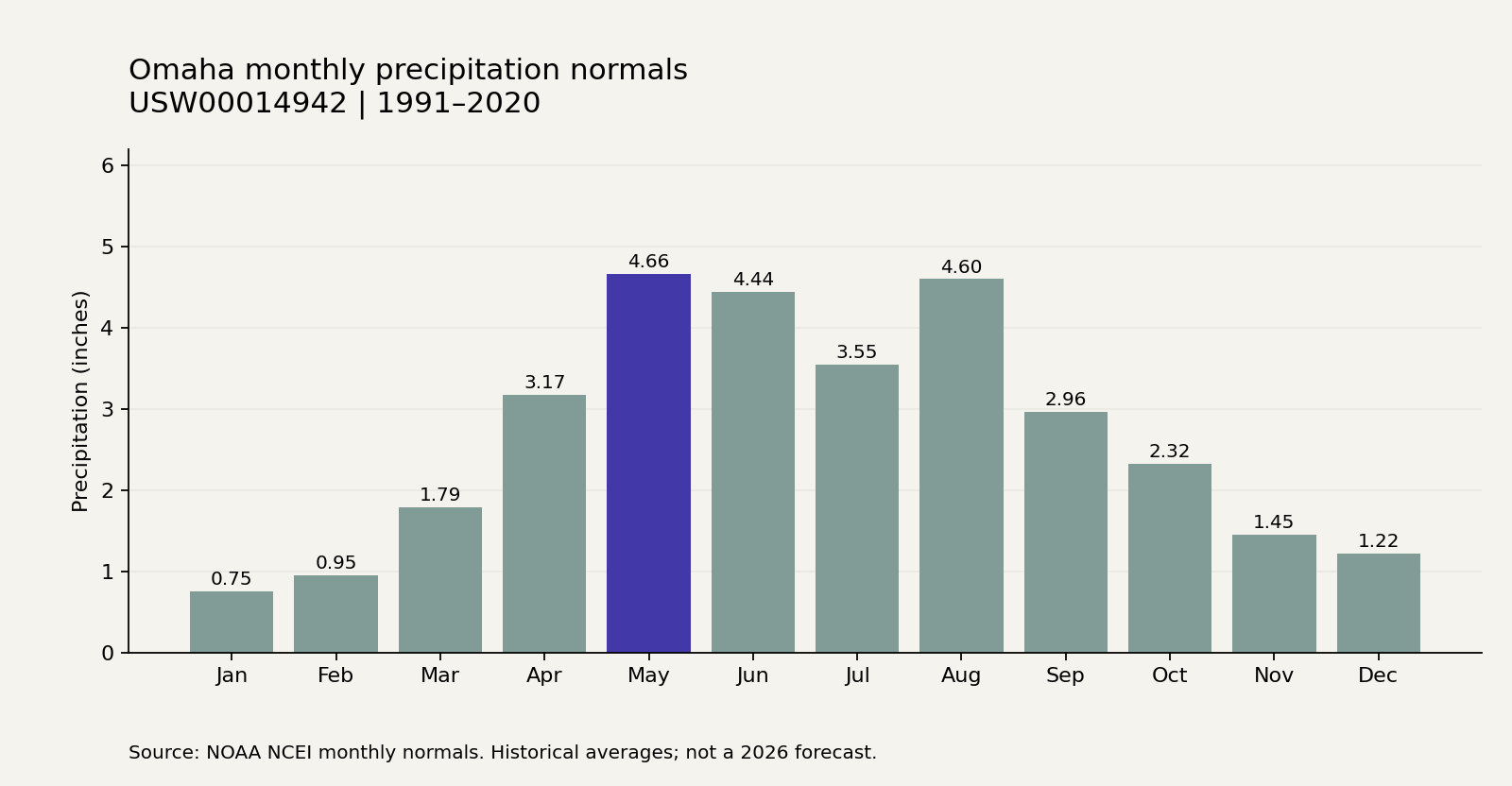
Source publications: U.S. Census Bureau · NOAA climate normals
Before, during and after
Your project preparation checklist
- Record where and when water appeared.
- Ask what the proposed system will address.
- Identify discharge and approval responsibilities.
- Keep completion and maintenance records.
Ten findings · Original sources
Go deeper into Omaha’s local evidence
Explore the housing estimates, station data and indoor-moisture guidance. Download the figures and see how the seasonal total was calculated.
Know the terms
Make the proposal easier to read
Five source-backed definitions, with Omaha context and practical questions for your project.
Hydrostatic Pressure
Pressure from water at rest, increasing with the height of water above a point.
Read the guideDrain Tile
Perforated drainage pipe that collects and conveys water near a foundation.
Read the guideSump Pump
A pump that moves collected water out of a sump basin through a discharge pipe.
Read the guideCheck Valve
A one-way valve that limits water flowing backward through a pipe.
Read the guideSewer Backup
Wastewater moving backward through a drain or plumbing fixture.
Read the guideEditorial responsibility
Arthur Smelyansky, Publisher
Below Grade organizes public sources and homeowner questions. The byline identifies the publisher; it does not imply trade credentials or a personal inspection.
Start with better questions